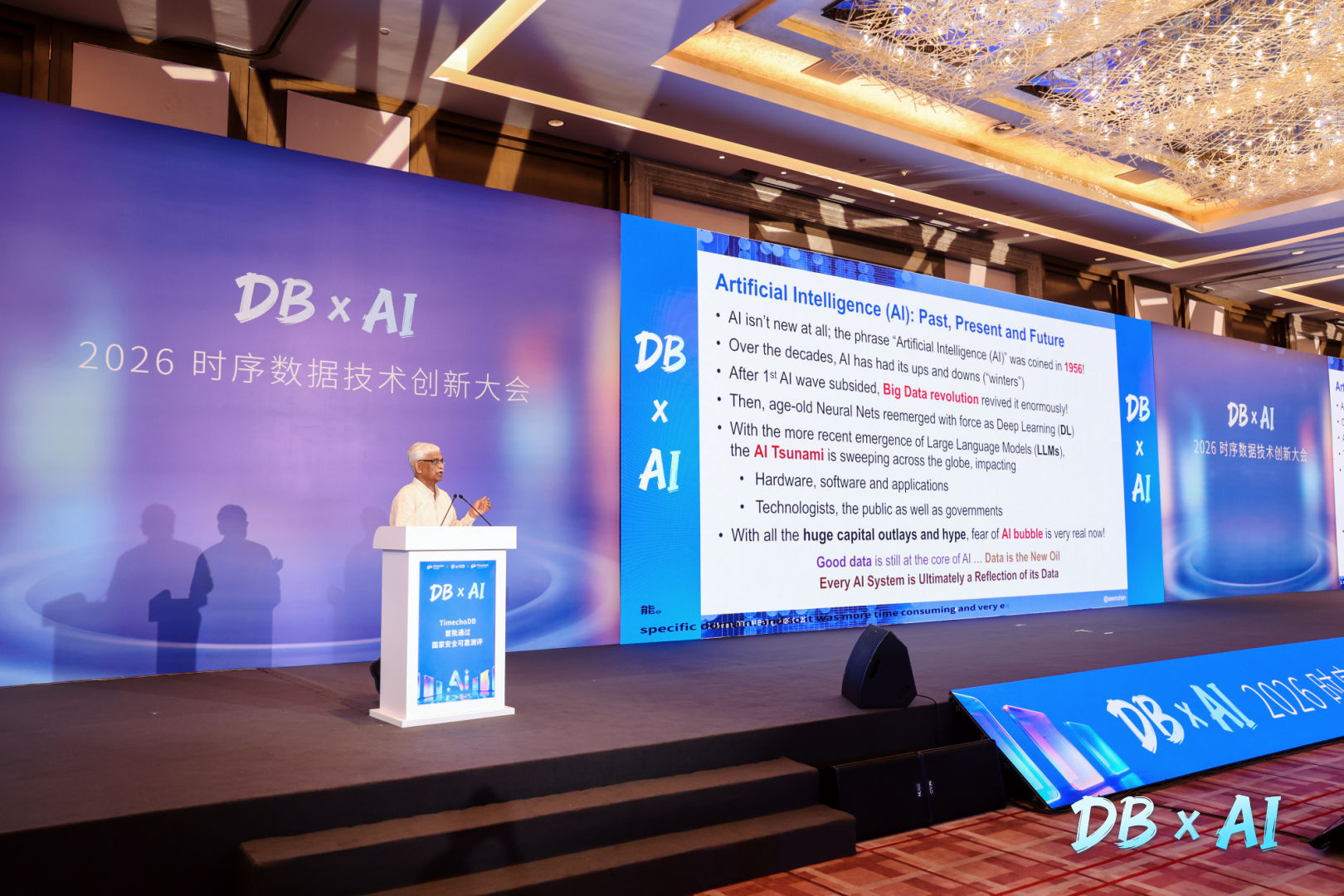
On August 22, 2026, the 2026 Time Series Tech Innovation Summit was successfully held in Beijing.
C. Mohan, Member of the US National Academy of Engineering and Distinguished Professor at Hong Kong Baptist University, delivered a keynote titled “Perspectives from Silicon Valley on DB × AI: When Data Met Intelligence.”
In this recap, let's revisit the key insights and highlights from his keynote.
Key Takeaways
AI Is Moving from Hype to Real-World Deployment: The current “AI tsunami” brings massive investment, growing environmental costs, and new challenges from emerging open models, making long-term validation and practical use more important than short-term excitement.
Data, Governance, and Access Shape AI’s Future: Data quality, representation, privacy, copyright, and AI sovereignty will influence who can build and benefit from AI.
Databases Are Becoming Core AI Infrastructure: Combining LLMs with vector search, knowledge graphs, and in-database inference can make responses more grounded and traceable, while agentic systems still require guardrails and face challenges in performance, reliability, security, and cost.
A 70-Year Journey: From Dartmouth to Today’s AI “Tsunami”
Artificial intelligence is often discussed as a modern phenomenon, but its roots go back much further. The term itself was coined in 1956 at a workshop at Dartmouth University, when keynote speaker C. Mohan was just one year old. In his keynote at the 2026 Time Series Tech Innovation Summit, Mohan offered a long-term perspective on the evolution of AI, placing today’s developments within a roughly 70-year history.
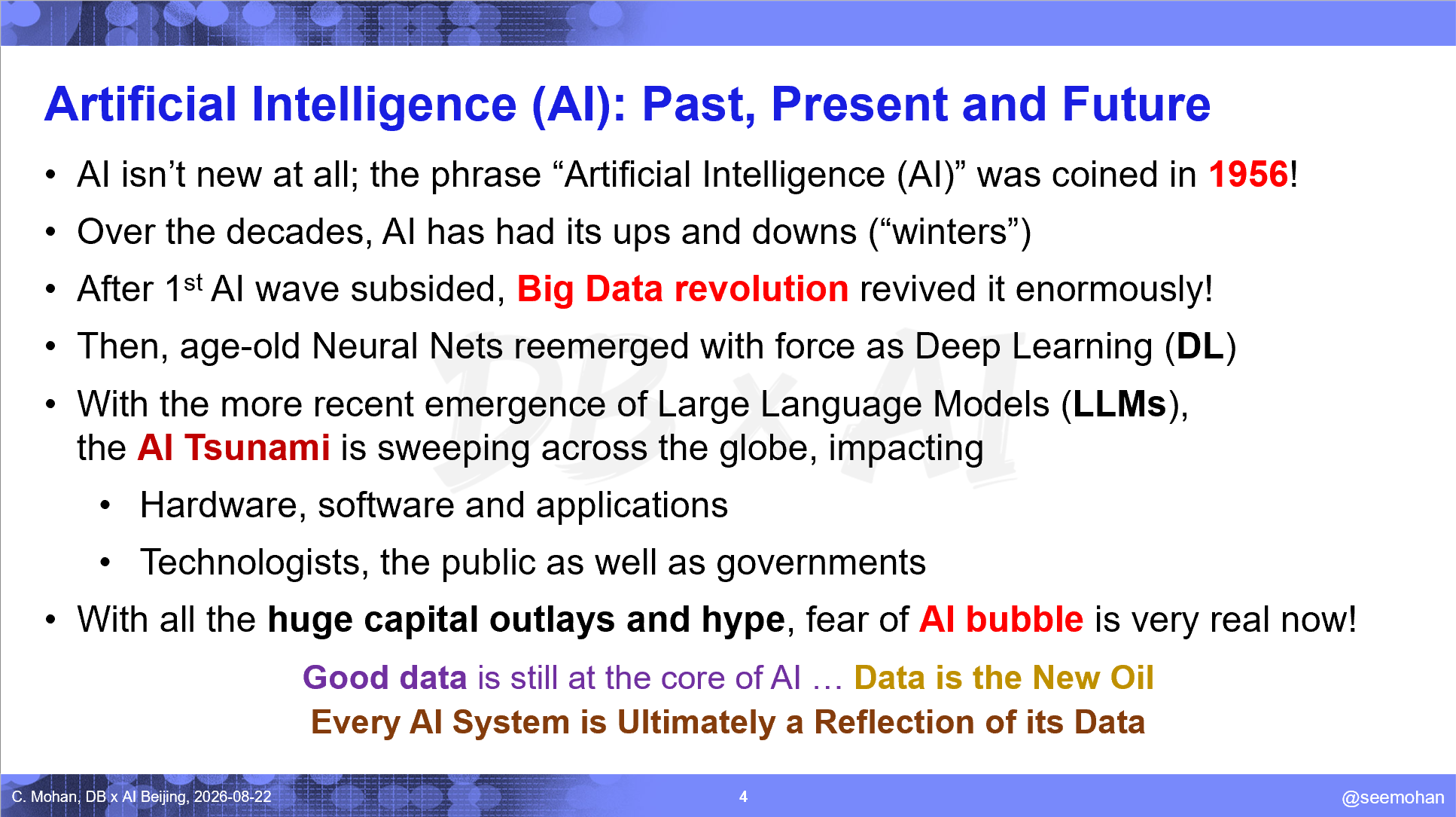
Mohan described two major waves of AI development. The first wave relied heavily on human expertise, with domain experts manually codifying rules and logic for specific domains. During his undergraduate years in India, he witnessed early work in areas such as image recognition and speech understanding. This approach was time-consuming and highly dependent on experts, and it was followed by repeated cycles of hype and disappointment.
The second wave was enabled in large part by the availability of big data, which allowed mathematical approaches to be used to train models without requiring domain experts to manually codify so much of the underlying knowledge. More recent developments, including deep learning and LLMs, have further expanded AI’s capabilities from text processing to multimodal applications involving text, images, audio, video, and other forms of content.
Yet Mohan described the current moment as an “AI tsunami.” The amount of money and resources being invested in AI over the past few years has been “mind boggling,” while the environmental impact of this development is also becoming increasingly important. At the same time, investors expect these investments to generate financial returns.
Drawing on his decades in Silicon Valley, Mohan offered a cautionary comparison with the dot-com era:
“All sorts of silly companies were formed and money was poured like crazy, especially in my backyard in Silicon Valley. And then the dot-com bust happened.”
His advice was to take a long-term view, wait for technologies to mature and become widely adopted, and focus on solving real problems rather than imagined ones. He also stressed the need to ensure that issues such as hallucinations do not lead to harmful consequences.
The Global AI Divide and the Question of Sovereignty
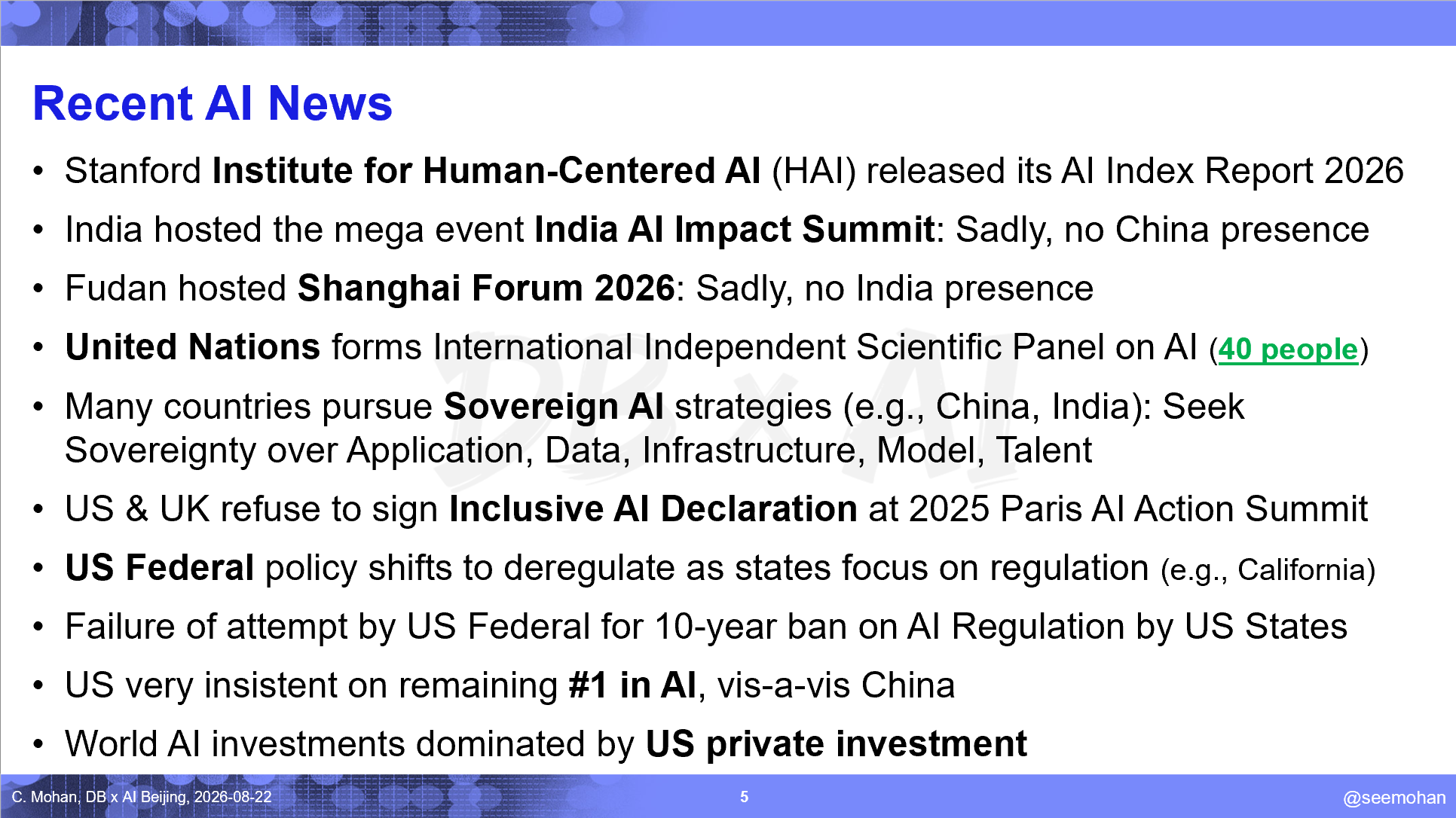
Mohan also highlighted the geopolitical dimension of AI. He pointed to major events taking place around the world and noted the lack of representation from some major countries at international AI gatherings.
At the AI Impact Summit in Delhi, inaugurated by the Indian Prime Minister and attended by executives from companies including OpenAI, Anthropic, Microsoft, Google, and NVIDIA, China was notably absent. When Mohan was invited to speak at the Shanghai Forum 2026 in April, India was the country missing from the representation.
“These two giants in terms of billion-plus people should really be collaborating,” Mohan stated. He also pointed to disagreements among governments over inclusive AI declarations and regulation, including differences between the US federal government and individual state governments.
These divisions raise broader questions about equity and representation. Will ordinary people have the background and resources needed to make effective use of LLMs, or will access remain concentrated among people and institutions with access to leading technologies? Mohan also questioned whether the data used to train LLMs adequately represents people around the world or primarily reflects Western populations and economic activity.
In this context, AI sovereignty has become increasingly important. Mohan noted that sovereignty over applications, data, infrastructure, models, and talent are all important considerations. Mohan suggested that countries may increasingly seek to develop or control AI systems that better reflect their own languages, cultural contexts, and policy priorities.
Shifting Power Dynamics: DeepSeek and the Rise of Open Models
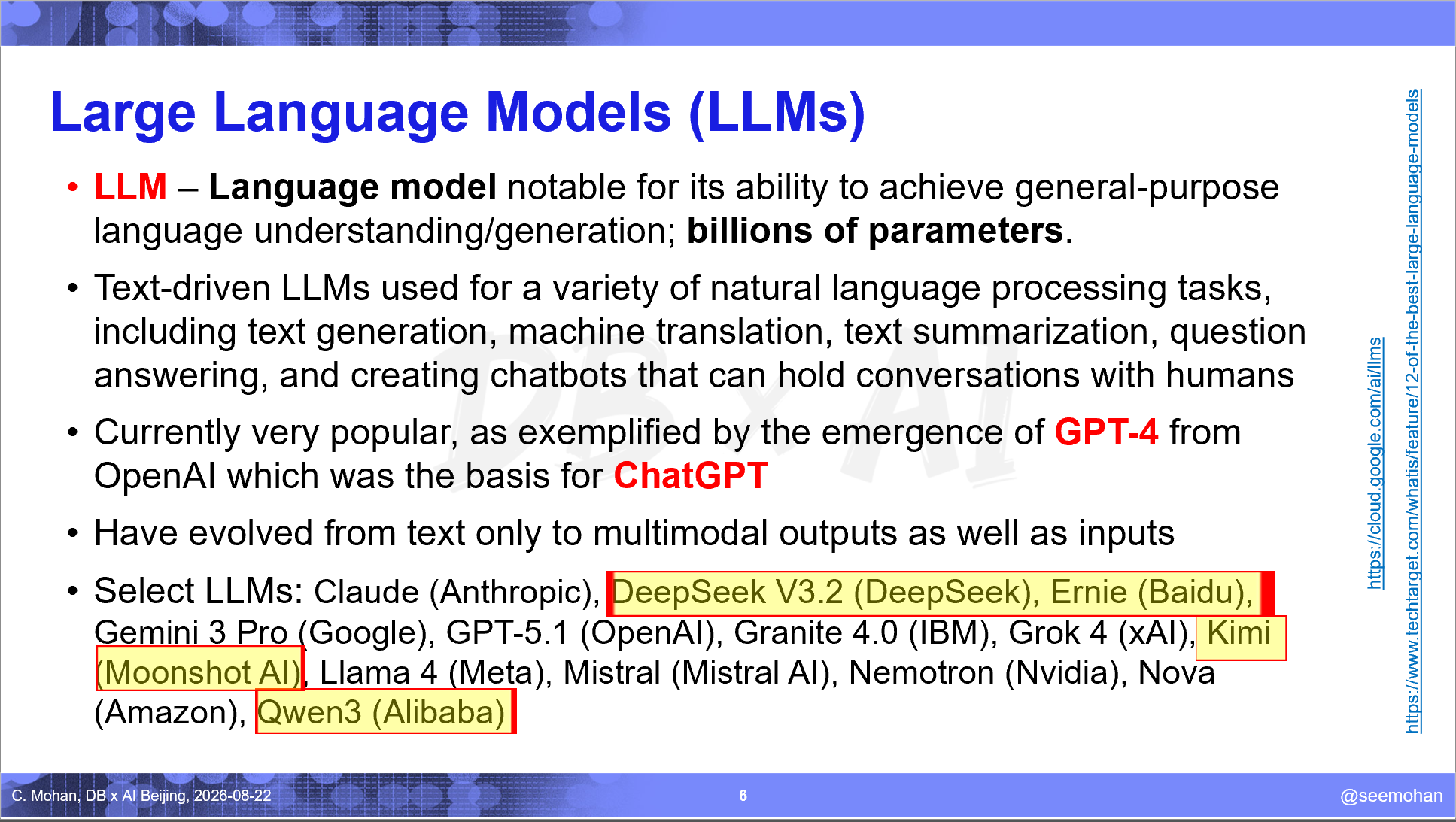
Mohan briefly reviewed the evolution of LLMs, noting that they initially focused on text and emerged from research into natural language understanding. Today, LLMs can handle multimodal content on both the input and output sides.
The LLM landscape is currently dominated by players from the US and China, but Mohan pointed to developments that are challenging established assumptions about how much capital is required to build high-performing AI systems.
When DeepSeek emerged, Mohan described it as:
“a kick in the back for lots of western way of thinking”
He used DeepSeek as an example of how innovative approaches may challenge the assumption that higher spending automatically produces better technology. He also highlighted the growing momentum behind Alibaba’s open-model efforts and suggested that some recent open models have become competitive with closed models on selected tasks and benchmarks.
Mohan observed that open models had previously lagged behind closed models in areas such as accuracy, performance, and capabilities. The gap between open and closed models has narrowed in some dimensions, although the extent of that gap depends on the model, task, and benchmark.
The Training Data Dilemma: Privacy, Copyright, and Access
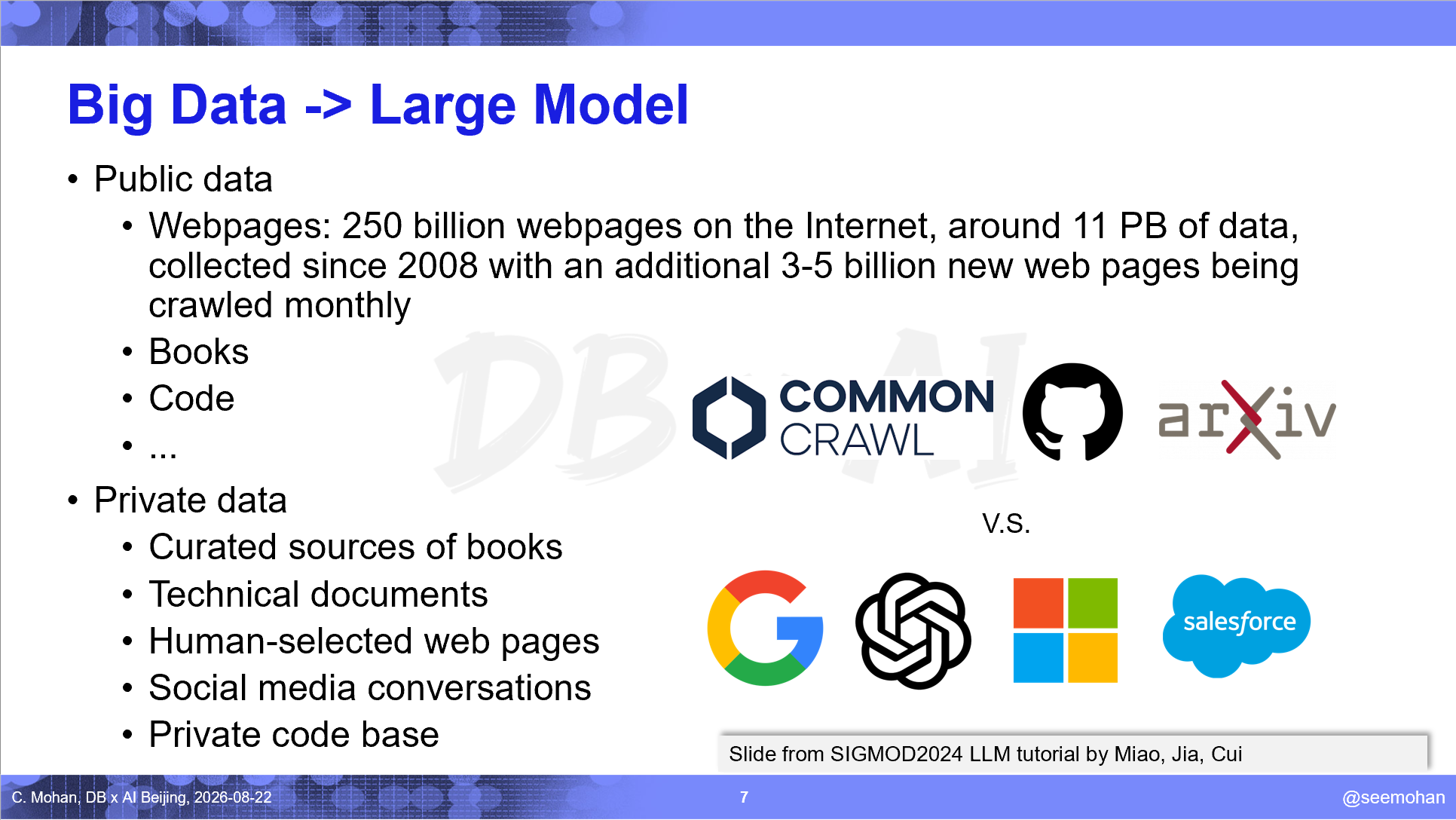
Beyond model architectures and capabilities, Mohan raised a fundamental question: What data is actually being used to train LLMs?
Is it only openly available data, or does it also include private interactions between users and services—for example, interactions involving Baidu, Google, Facebook, or WeChat? Such private data may provide an important advantage to companies that have access to it.
This creates an access gap between ordinary developers and large technology companies. Developers without access to proprietary systems and data may have fewer resources available to them, while large technology companies may benefit from broader access to proprietary infrastructure, products, and data—subject to legal and contractual restrictions.
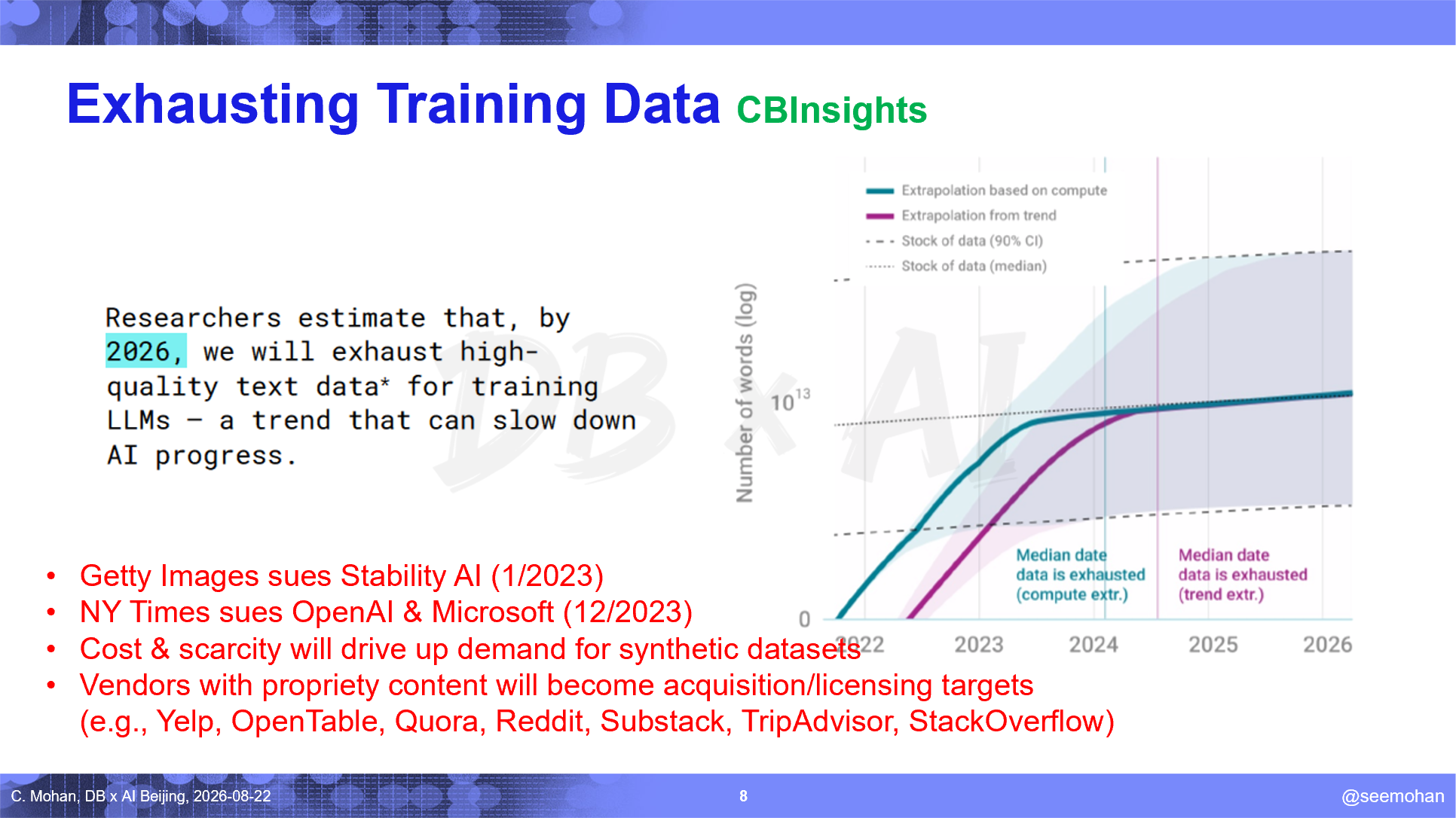
Copyright is another major concern. Mohan cited copyright litigation involving The New York Times, OpenAI, and Microsoft as an example of the unresolved legal questions surrounding training data. As he noted:
“just because something is out there that you can look at, it doesn't mean you are free to, without licensing the content, be able to do things.”
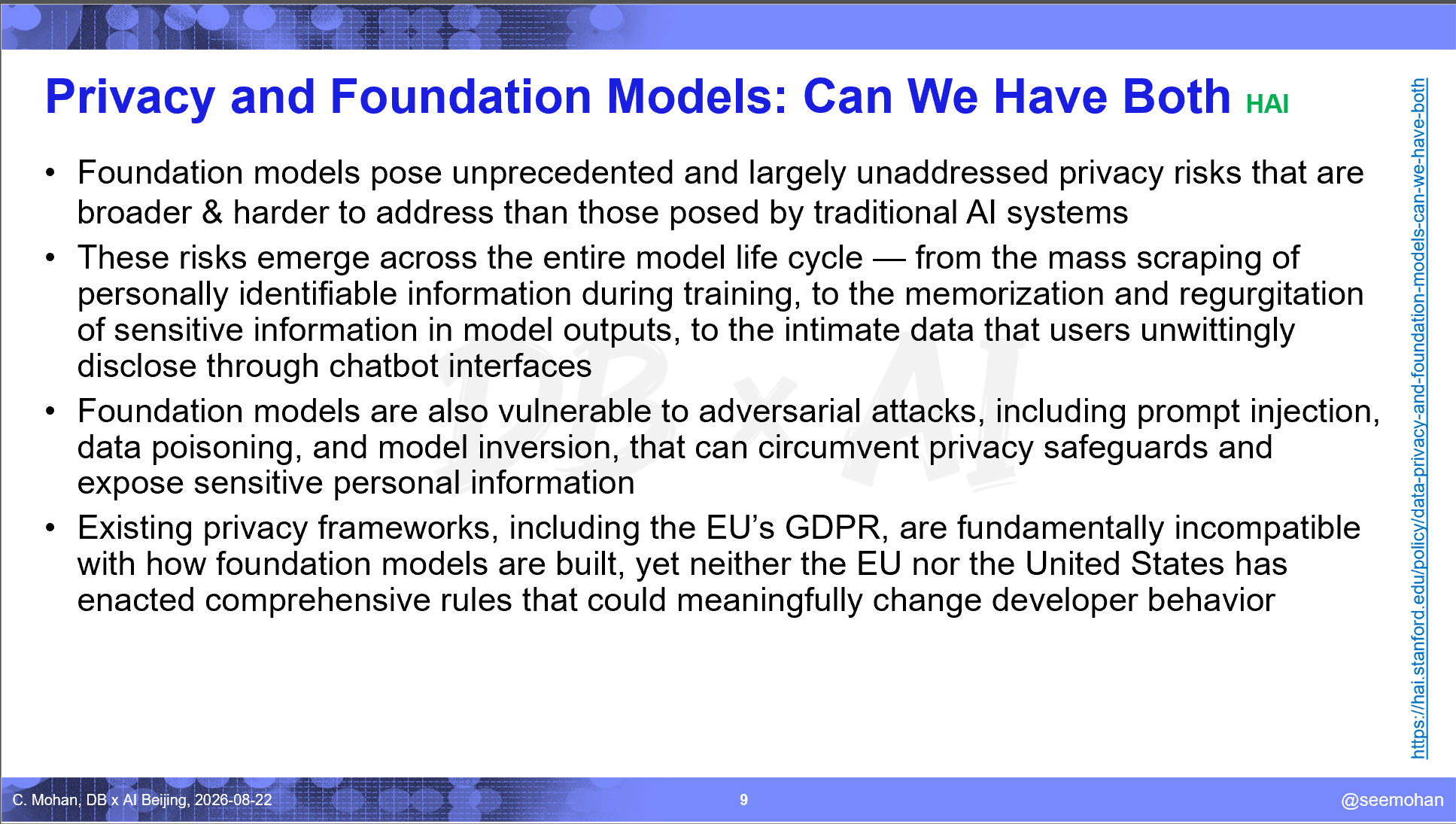
Privacy presents another challenge. Mohan warned that personally identifiable information could be exposed unintentionally when foundation models are built using large amounts of data. Chatbot interactions can also lead users to reveal personal information that could potentially be used by the companies operating those systems.
Navigating the Hype Cycle and the Rise of Agentic AI
Mohan referenced Gartner’s hype cycle to explain how emerging technologies often move from initial excitement to inflated expectations, disappointment, and eventually maturity and production deployment. He also noted that not every idea completes the cycle; some experience “premature death.”
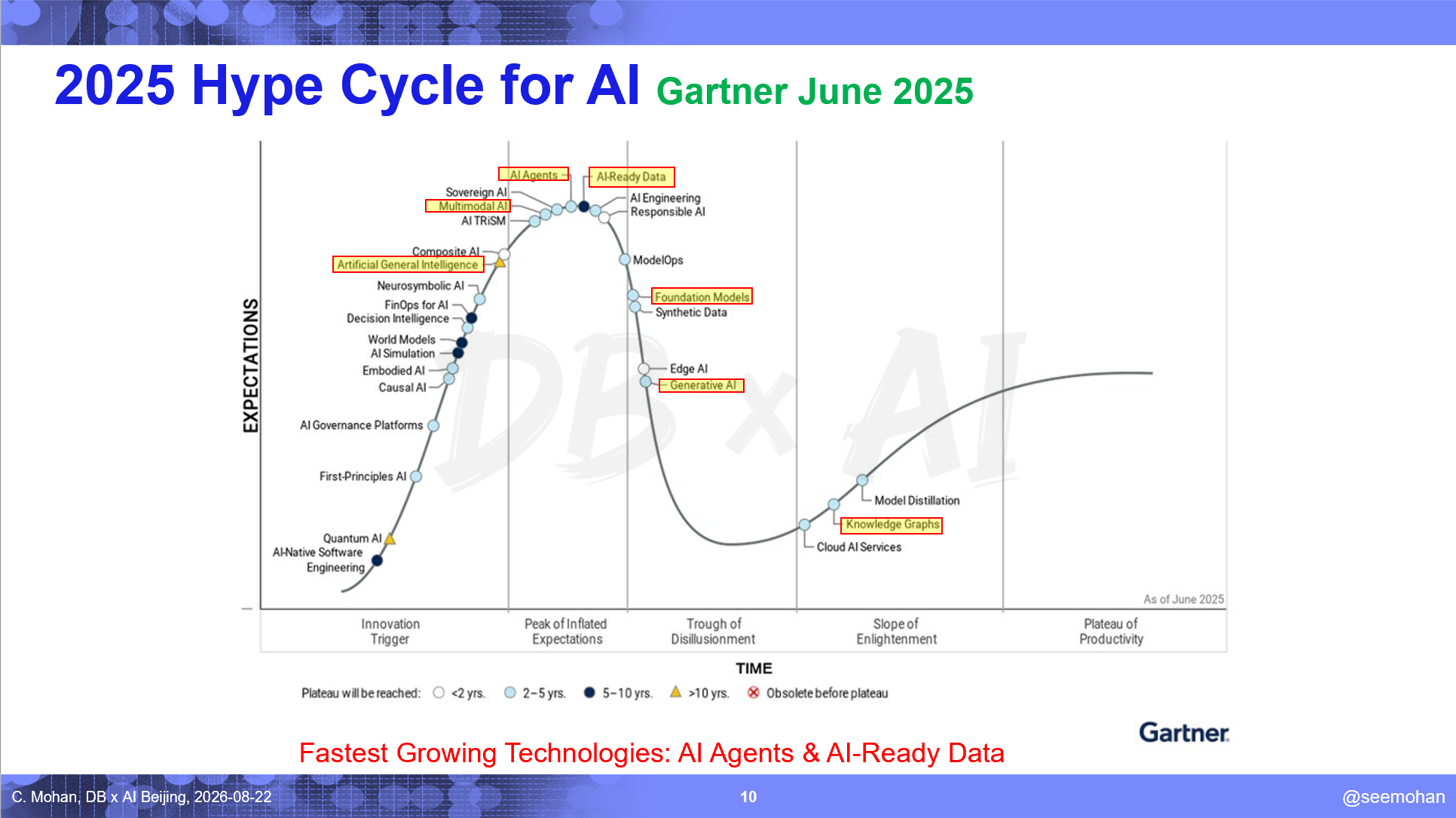
Currently, the industry is at the “peak of inflated expectations” for several key technologies, including agentic AI, AI-ready data, open-source AI labs, domain-specific generative models, and Retrieval-Augmented Generation (RAG).
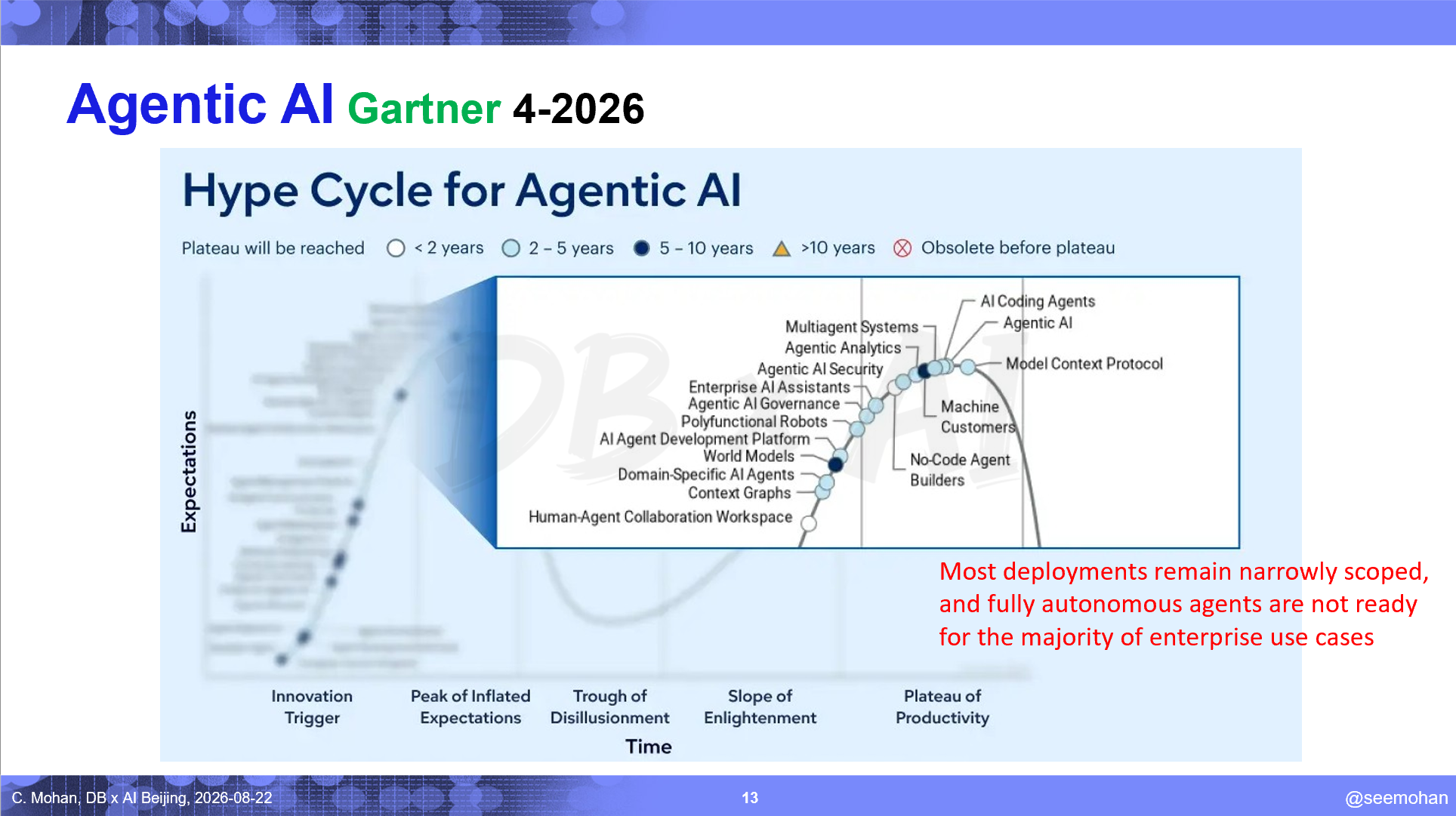
Mohan observed that agent technology has “overtaken the world.” Instead of people interacting with multiple systems to complete a business process or workflow, software agents are increasingly taking over those tasks. However, without appropriate guardrails, such systems could cause harm to society.
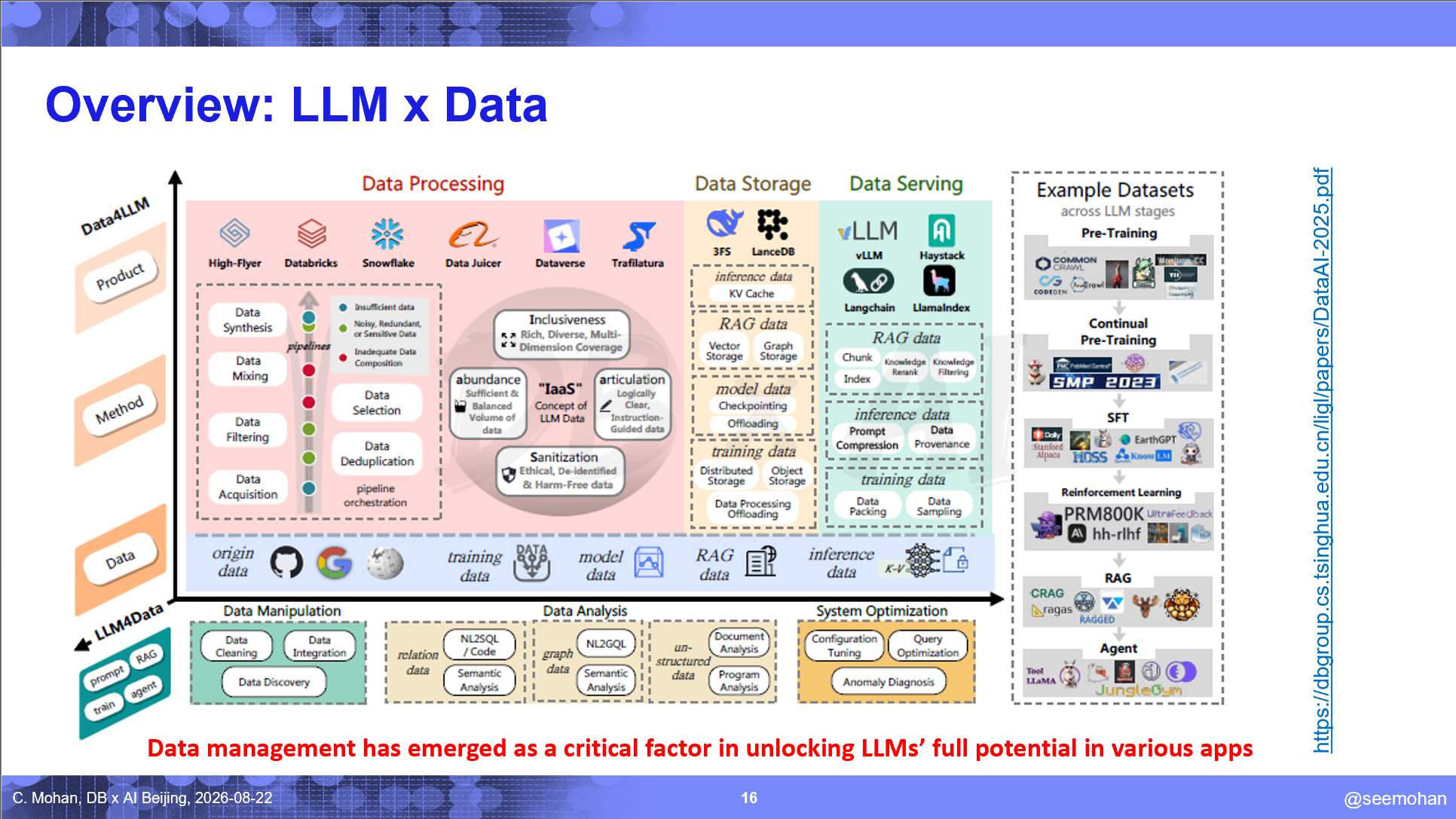
Mohan then connected this development to the conference theme. Rather than relying on LLMs alone, combining databases with LLMs can help improve the model’s ability to provide logical answers and reduce the impact of hallucinations. He highlighted the integration of vector search and knowledge graphs with LLMs as examples of this approach.
The Convergence of AI and Databases: Building More Grounded AI Systems
The core technical theme of this Summit was “DB × AI”, the convergence of AI and databases, which Mohan described as having “major synergistic momentum.”
He noted that database professionals had previously wondered whether the momentum behind AI might reduce the importance of databases. In contrast, AI is becoming increasingly dependent on data technologies, creating a strong competitive advantage for organizations with expertise in both AI and databases.
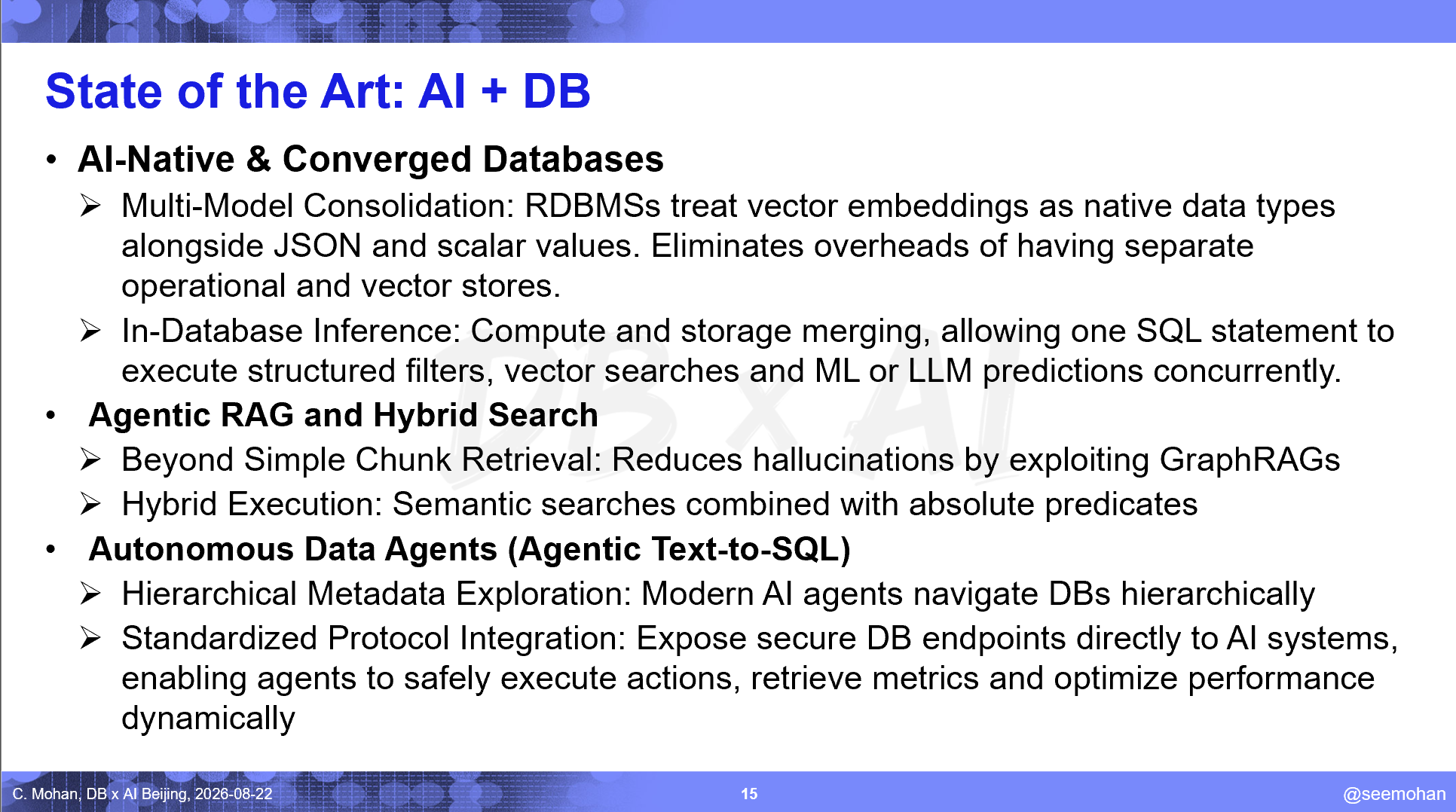
Mohan highlighted several examples of this convergence, including AI-native databases, the integration of traditional database technologies with vector search and graphs, and in-database inferencing that can invoke LLM or ML models within SQL queries during execution. Natural-language access to databases is another emerging capability.
He also discussed Google’s approach to the AI stack and its “Agentic Data Cloud.” He cited Google’s database products, including Spanner and AlloyDB, as examples of systems incorporating capabilities such as vector search and other AI-oriented features. AlloyDB was initially similar to Amazon Aurora but was later enhanced with vector search and natural-language capabilities, and is now positioned as an “AI database.”
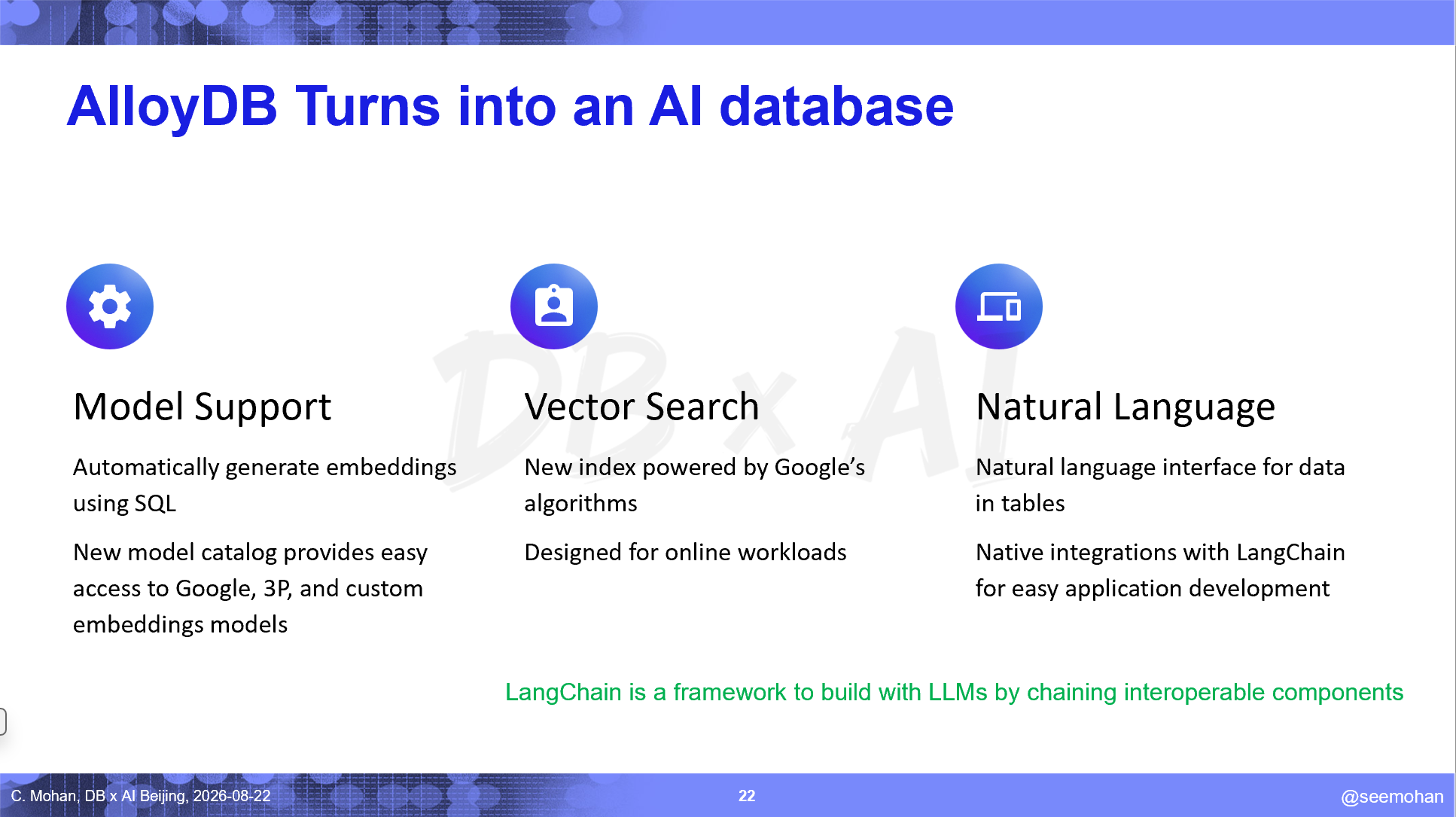
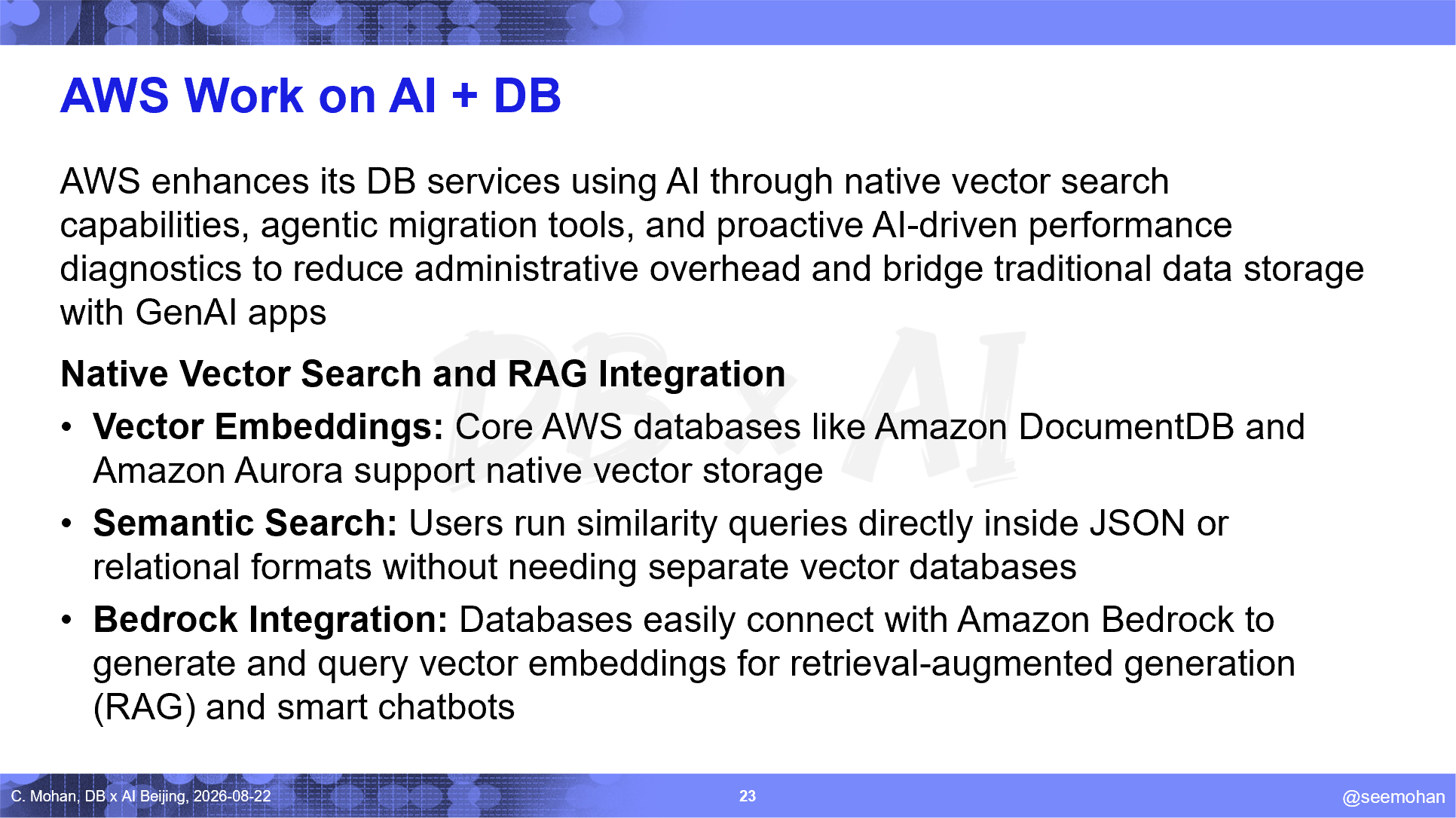
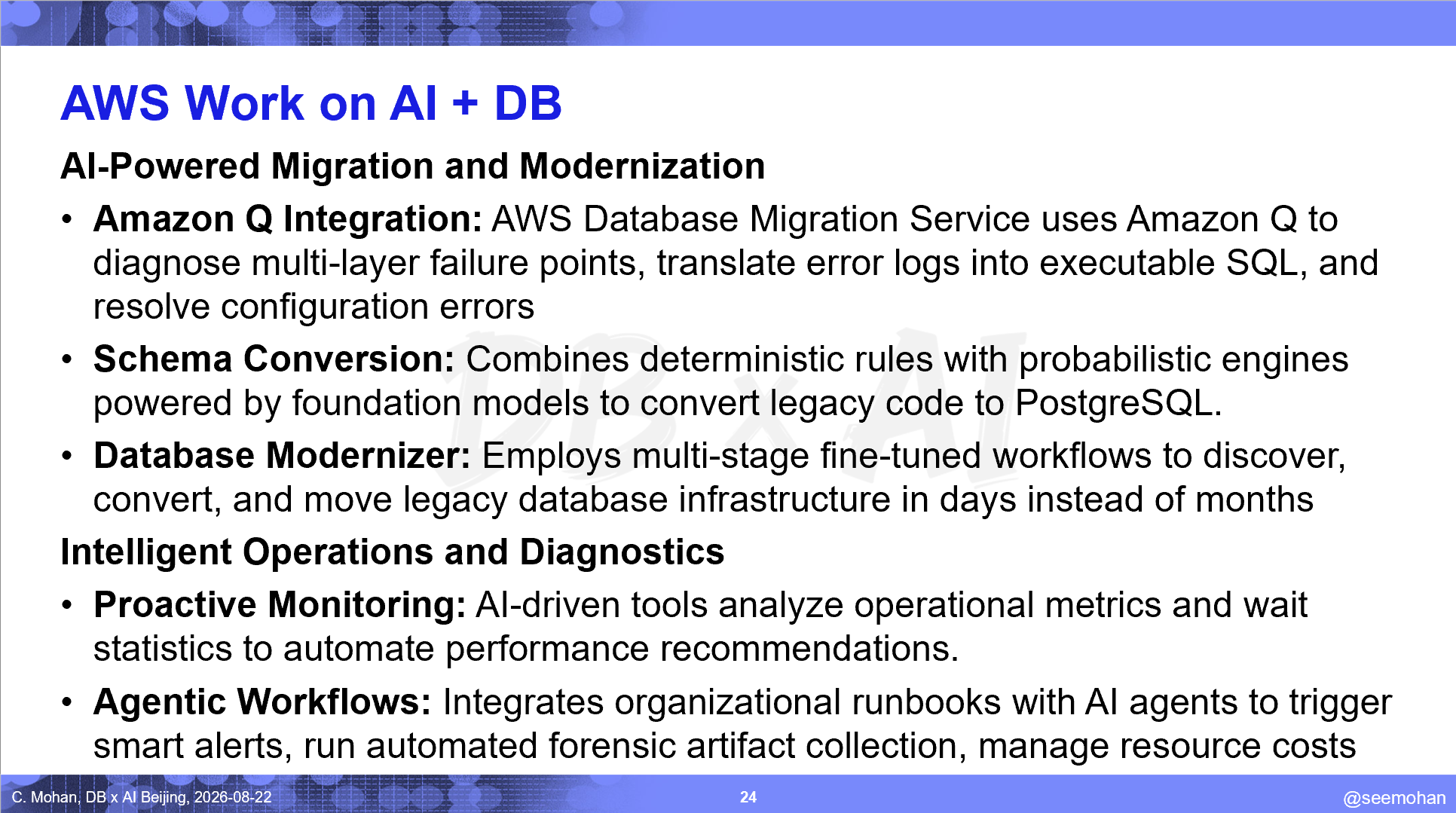
Mohan also highlighted similar developments by other vendors, including semantic search, schema conversion, and the use of AI to migrate customers from one database system to another. Importantly, he noted that the goal can extend beyond migrating data to migrating entire applications. AI can also be used within database systems for more adaptive query optimization and proactive data monitoring.
Conclusion: Excitement Tempered by Societal Awareness
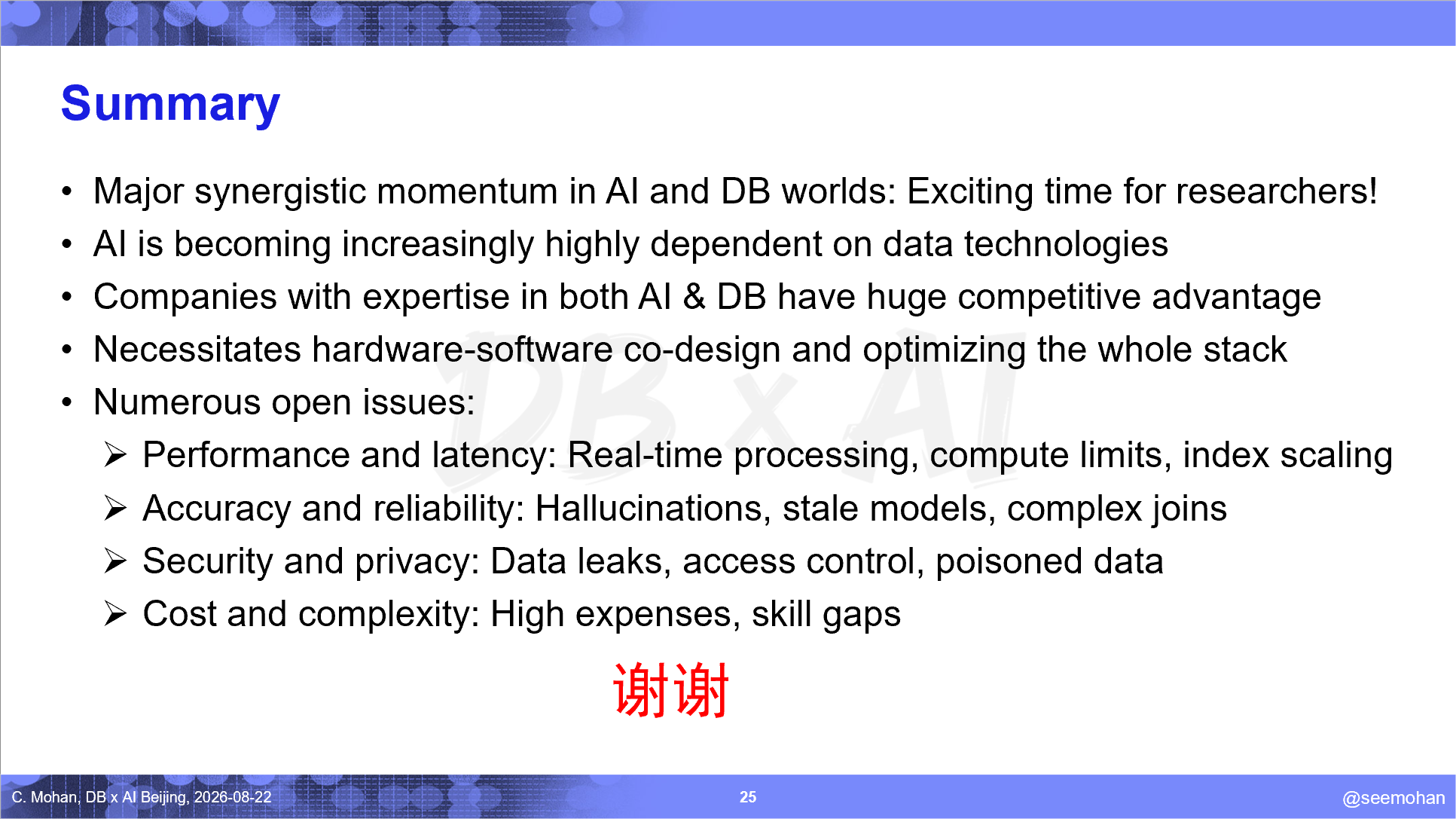
The convergence of AI and databases represents an exciting area for researchers and technologists. Mohan emphasized the need for a top-down perspective across the technology stack, including hardware and software design, while recognizing open challenges related to performance, latency, accuracy, reliability, security, privacy, cost, and complexity.
Mohan concluded with a reminder that technological progress should be considered alongside its broader impact:
“The world is exciting, and there is much more to come. But we must remain aware of societal concerns, not just technical ones.”
As AI and database technologies continue to converge, balancing technological ambition with awareness of societal concerns will be an important part of shaping their future.